The US-Iran war that erupted on February 28, 2026 may be edging toward resolution — or it may not. That ambiguity is itself the most important signal for investors right now.
As of May 18, 2026, the two sides are reportedly close to signing a 14-point memorandum of understanding (MOU) that would formally end hostilities, reopen the Strait of Hormuz, and begin 30-day talks on Iran's nuclear program. Trump has said a deal is "very possible." Iran's parliament speaker mocked the process on social media. Israel says it wasn't told a deal was near. Oil markets are pricing in continued uncertainty.
For investors with exposure to Korean assets, global energy markets, or dollar-denominated positions — the resolution or continuation of this conflict is the single biggest macro variable of 2026. Gain Lab breaks down what's actually in the proposed deal, why it's still fragile, and what it means for your portfolio in each scenario.
What's Actually in the 14-Point MOU — The Deal on the Table

📌 Key Terms of the Proposed US-Iran MOU (as of May 2026)
• Nuclear enrichment: Iran agrees to a moratorium on uranium enrichment for 12-15 years (Iran proposed 5, US demanded 20)
• HEU stockpile: Iran agrees to remove highly enriched uranium — possibly to the US
• Underground facilities: Iran commits not to operate underground nuclear facilities
• UN inspections: Enhanced inspection regime including snap inspections
• Hormuz: Both US and Iranian shipping restrictions lifted gradually over 30 days
• Sanctions: US agrees to gradual lifting of Iran sanctions
• Frozen funds: Billions in frozen Iranian assets released
• Timeline: MOU triggers 30-day period of detailed negotiations
• Collapse clause: If talks fail, US reserves right to restore blockade or resume strikes
What is not in the current framework is equally important. The deal reportedly does not address Iran's ballistic missile program or its support for regional proxy groups — two of the original stated objectives of the US-Israel military campaign. Israel views this as a critical gap. A senior Israeli official told CNN: "Our hand is on the pulse. We will be happy if there will be no deal, we will be happy if the siege on Hormuz continues, and we will be happy if Iran gets a few more strikes."
Why the Deal Is Still Fragile — 4 Fault Lines
① Iran's Internal Division
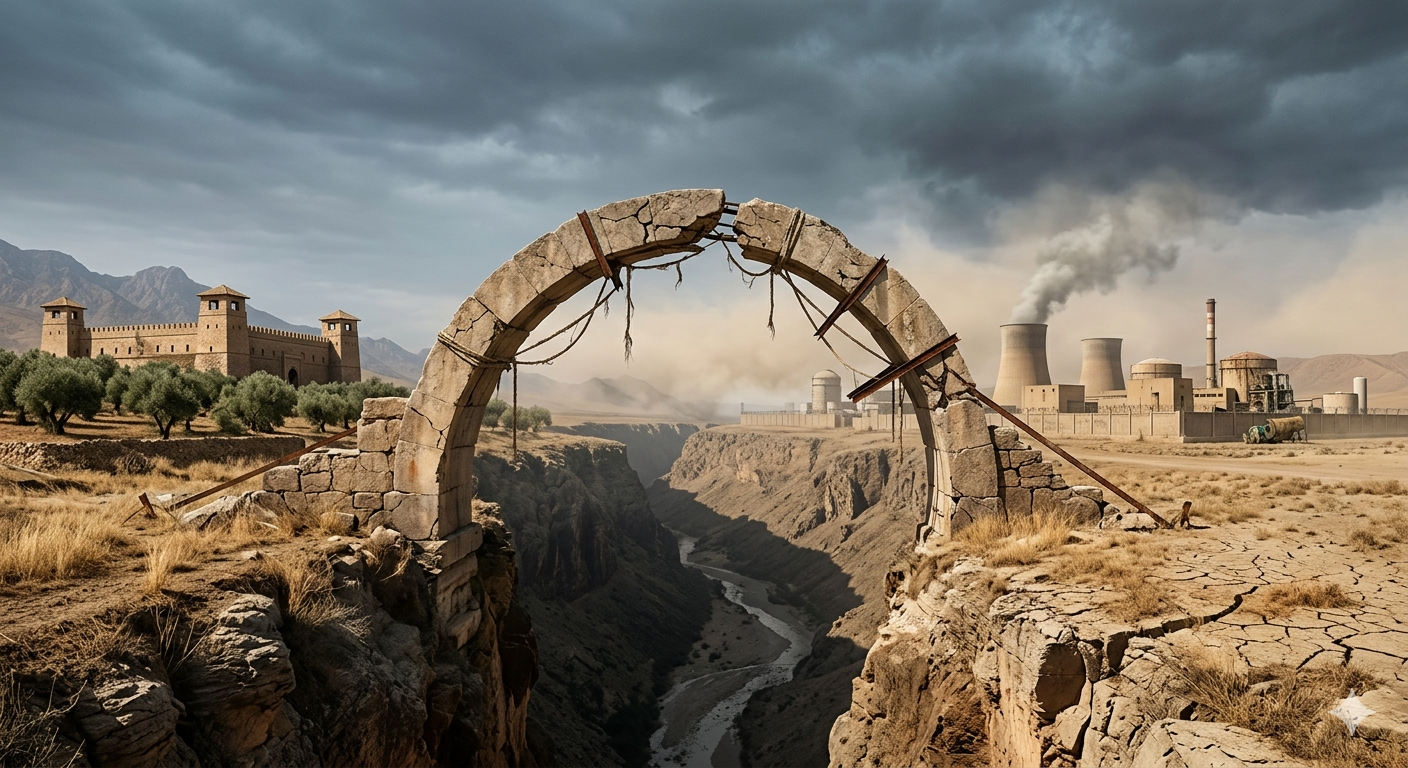
The White House believes the Iranian leadership is divided and it may be hard to forge consensus across the different factions. The first round of direct talks collapsed because the Iranian negotiating team had to return to Tehran for authorization to sign. Iran's parliament speaker publicly mocked the MOU process. Hardliners within the Revolutionary Guard and the clerical establishment remain opposed to any deal that involves removing enriched uranium from Iranian soil — a core US demand.
② Israel's Opposition to a "Bad Deal"
Israel is concerned that Trump may strike an agreement with Iran before addressing some of the key issues that drove the two countries to launch the war in the first place. Netanyahu has insisted that all enriched uranium must leave Iran. The IDF has been instructed to prepare for all scenarios, including a return to fighting. An Israeli official said escalation remains "a realistic scenario if the Iranians continue to play and drag negotiations." Israel's concern: a deal with sunset clauses could mirror the flawed 2015 JCPOA that both Trump and Netanyahu repeatedly criticized.
③ The Uranium Stockpile Deadlock
Iran currently holds approximately 400kg of uranium enriched to near-weapons-grade (60% purity, with 90% needed for a weapon). Trump told Netanyahu that without agreement on the removal of this stockpile, there would be no deal. Iran has historically rejected this demand. One option under discussion is moving the material to the United States — a concession that would be politically explosive domestically for Iranian leaders.
④ The Hormuz Reopening Sequence
Iran has insisted that a preliminary agreement cover only sanctions relief and the strait, with the nuclear matter being relegated to later stages. The US wants nuclear commitments upfront before lifting sanctions. This sequencing disagreement — who concedes first — has been a persistent sticking point. The proposed MOU attempts to resolve this with simultaneous, graduated steps, but implementation verification remains unresolved.
What Happens to Markets in Each Scenario
Probability: 30-40% (markets currently pricing lower)
Oil: Dubai crude falls from ~USD 100 to USD 70-80 range within weeks. This is the single biggest deflationary impulse available to the global economy right now.
Korean assets: Won strengthens sharply toward KRW 1,380-1,420. Import prices normalize. Bank of Korea resumes rate cut guidance. KOSPI rallies broadly. Long KTBs outperform as rate cut expectations return. Gold and USD assets give back geopolitical premium.
Global: Inflation expectations collapse. Fed pivot timeline accelerates. Risk assets globally rally. Shipping and aviation recover sharply.
Probability: 45-50%
Oil: Stays in the USD 90-115 range. Hormuz remains partially restricted. Global energy costs remain elevated.
Korean assets: Won stays in KRW 1,450-1,510 range. Korean CPI continues rising toward 3%+. Bank of Korea frozen. WGBI inflows provide partial won support. Semiconductor-driven K-shape continues.
Portfolio: USD, gold, and short-duration US bonds continue to outperform KRW cash and long Korean bonds. No catalyst for a broad reversal.
Probability: 15-25%
Oil: Surges above USD 140. Full Hormuz blockade. Global recession risk becomes central scenario for major institutions.
Korean assets: Won weakens sharply past KRW 1,550. Import prices surge further. Korean CPI potentially breaches 4-5%. Manufacturing supply chains disrupted. KOSPI falls broadly except defense/shipbuilding.
Portfolio: Gold spikes. USD strengthens aggressively. Safe-haven US treasuries rally. Korean equity exposure and KRW cash positions suffer significant real losses.
What the Market Is Currently Pricing In
Despite Trump's optimistic statements, market signals suggest investors are not yet pricing in a successful deal. Oil remains above USD 95 — significantly below the March peak of USD 128 but well above the pre-war level of USD 68. The Korean won has stabilized but not strengthened materially. Gold remains near all-time highs. These market positions are consistent with Scenario B (prolonged negotiations) rather than Scenario A (resolution).
| Market Signal | Current Level | Pre-War Level | What It's Pricing |
|---|---|---|---|
| Dubai Crude (oil) | ~USD 95-100/bbl | USD 68/bbl | Partial risk premium, no resolution |
| Korean Won (KRW/USD) | ~1,470-1,490 | ~1,440 | Partial stabilization, not deal optimism |
| Gold | ~USD 4,800/oz | ~USD 2,600/oz (pre-2026) | Persistent uncertainty priced in |
| US 2-Year Treasury Yield | ~3.8-4.0% | ~4.2% | Some rate cut expectation returning |
| KOSPI | Semiconductor-led recovery | Broad pre-war levels | K-shaped, not broad recovery |
Deal signal (bullish): Iran formally responds to MOU positively → Oil drops below USD 85 intraday → Won strengthens past KRW 1,430
Collapse signal (bearish): Iran rejects MOU / Israel launches new strikes → Oil surges above USD 120 → Won weakens past KRW 1,530
Limbo signal (current base case): Talks continue without resolution → Oil stays USD 90-110 → Won stays KRW 1,450-1,510
Frequently Asked Questions — US-Iran Deal and Investment Impact
The US-Iran MOU is closer than it has ever been — and further from certainty than the headlines suggest. Four separate fault lines (Iranian internal division, Israel's opposition, the HEU stockpile deadlock, and Hormuz sequencing) each have the potential to collapse the deal independently. Markets are right to remain cautious: oil at USD 95 rather than USD 68 tells you the probability-weighted outcome is still "no clean resolution." The correct portfolio response is not to bet on a deal or its failure, but to maintain a structure that survives either outcome: gold and USD for protection, short-duration bonds for yield, and selective Korean equity exposure in sectors with pricing power regardless of energy costs. The deal, if it comes, will be a moment to rebalance — not a moment to have been caught unprepared in either direction.
Oil at USD 95 is the market's best guess. Build for the range, not the point estimate.